
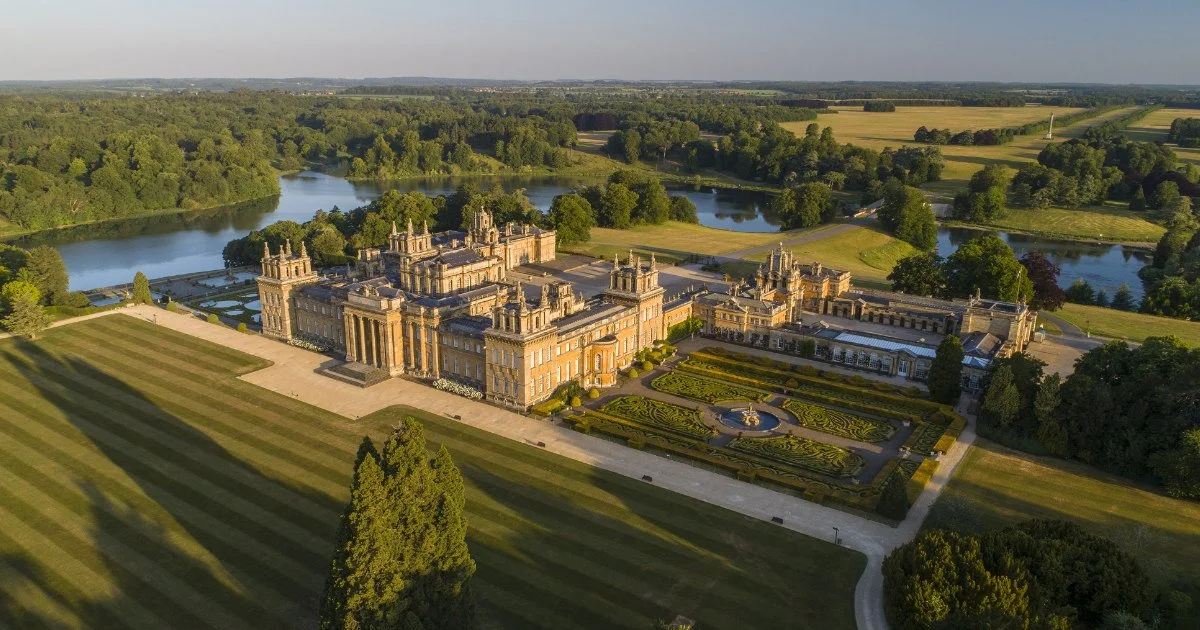
Blenheim Palace
Set within more than 2,000 acres of parkland, Blenheim Palace is one of Britain’s most remarkable historic houses. It was created as a national monument to John Churchill, 1st Duke of Marlborough, following his victory over the forces of Louis XIV at the Battle of Blenheim in 1704. Designed by John Vanbrugh and Nicholas Hawksmoor, the palace is a dramatic expression of Baroque architecture, built to celebrate military triumph, political influence and aristocratic power.
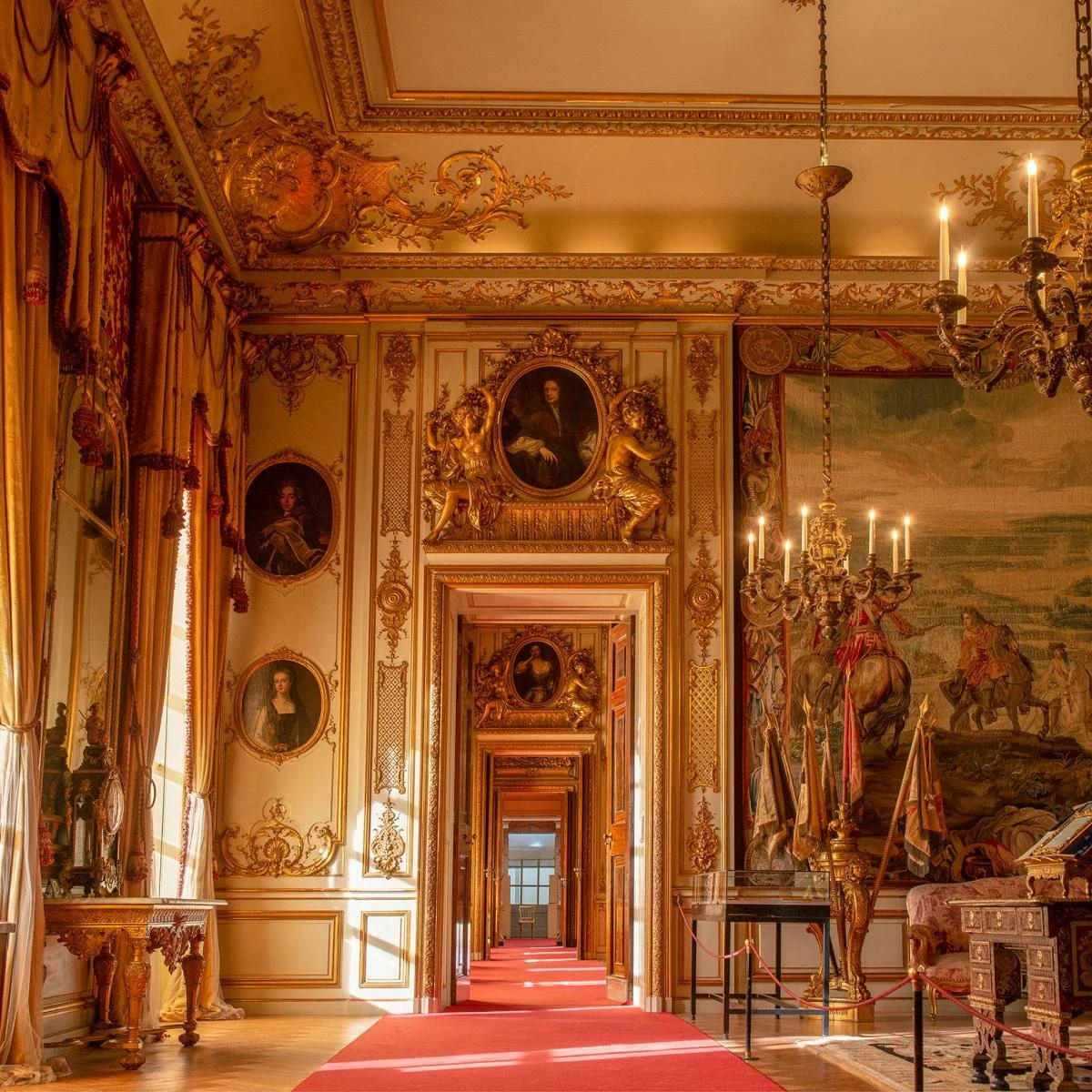
Inside, the State Rooms tell the story of the Marlborough family through magnificent tapestries, portraits, furniture and personal possessions. Highlights include the Great Hall, the richly decorated saloons and the Long Library, which extends for more than 55 metres. Blenheim was also the birthplace of Sir Winston Churchill, whose life remained closely connected with the palace and its surrounding landscape.
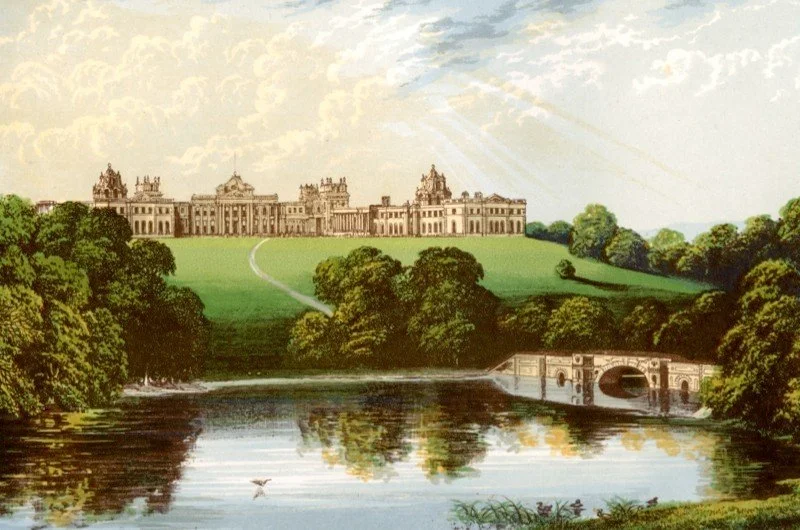
Beyond the palace, the grounds reveal another chapter of its history. During the eighteenth century, Capability Brown reshaped the estate into an apparently natural landscape of sweeping lawns, wooded hills and a great lake. His work transformed Blenheim’s formal surroundings and helped establish the English landscape style that would become admired around the world.
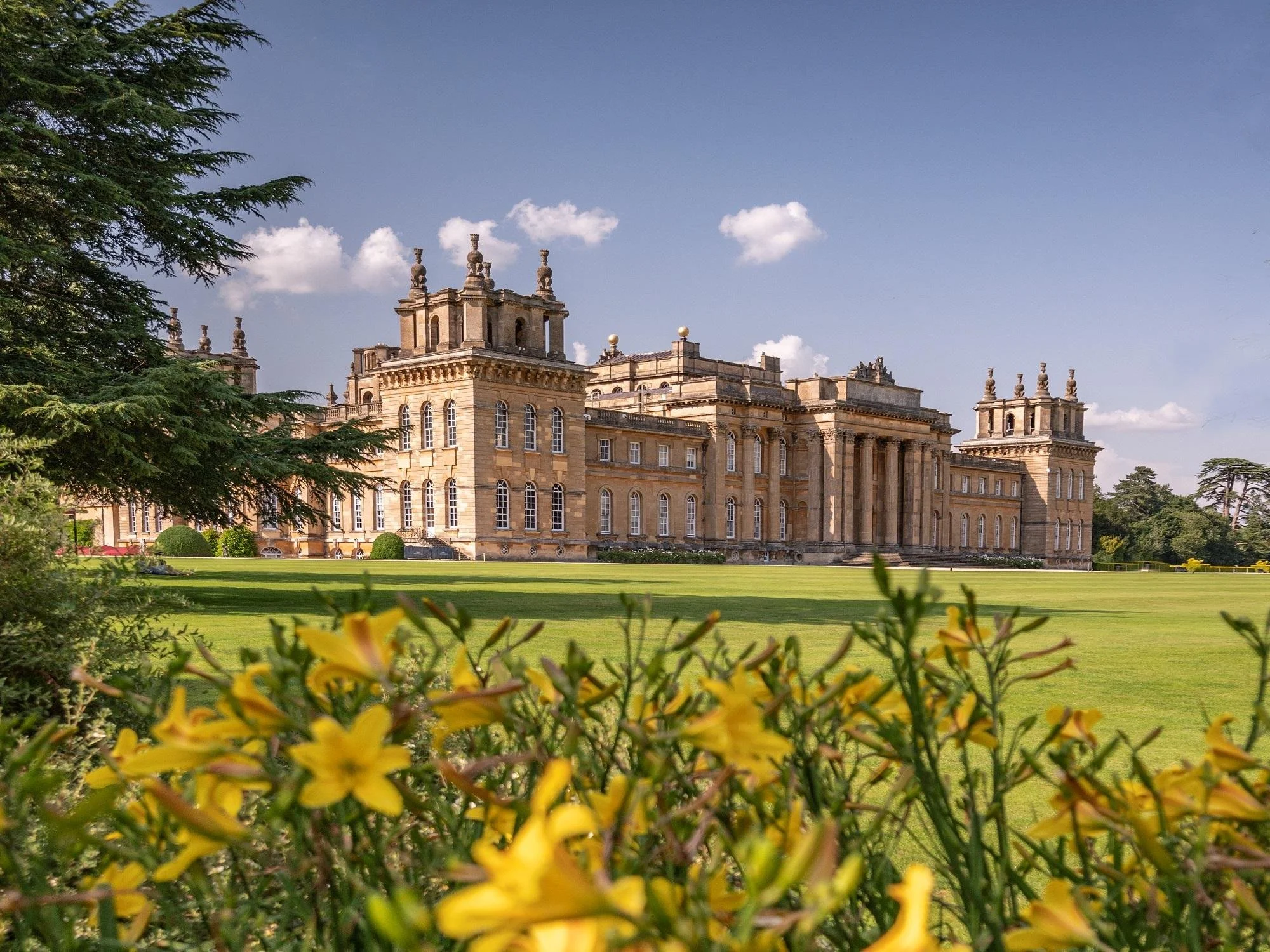
A visit to Blenheim brings together architecture, art, politics, family history and landscape. Its story encompasses military victory and national celebration, but also the personalities, ambitions and financial pressures behind life in one of England’s greatest country houses. A private visit can be shaped around your interests, with the option to explore the palace, its gardens and the historic neighbouring town of Woodstock.