
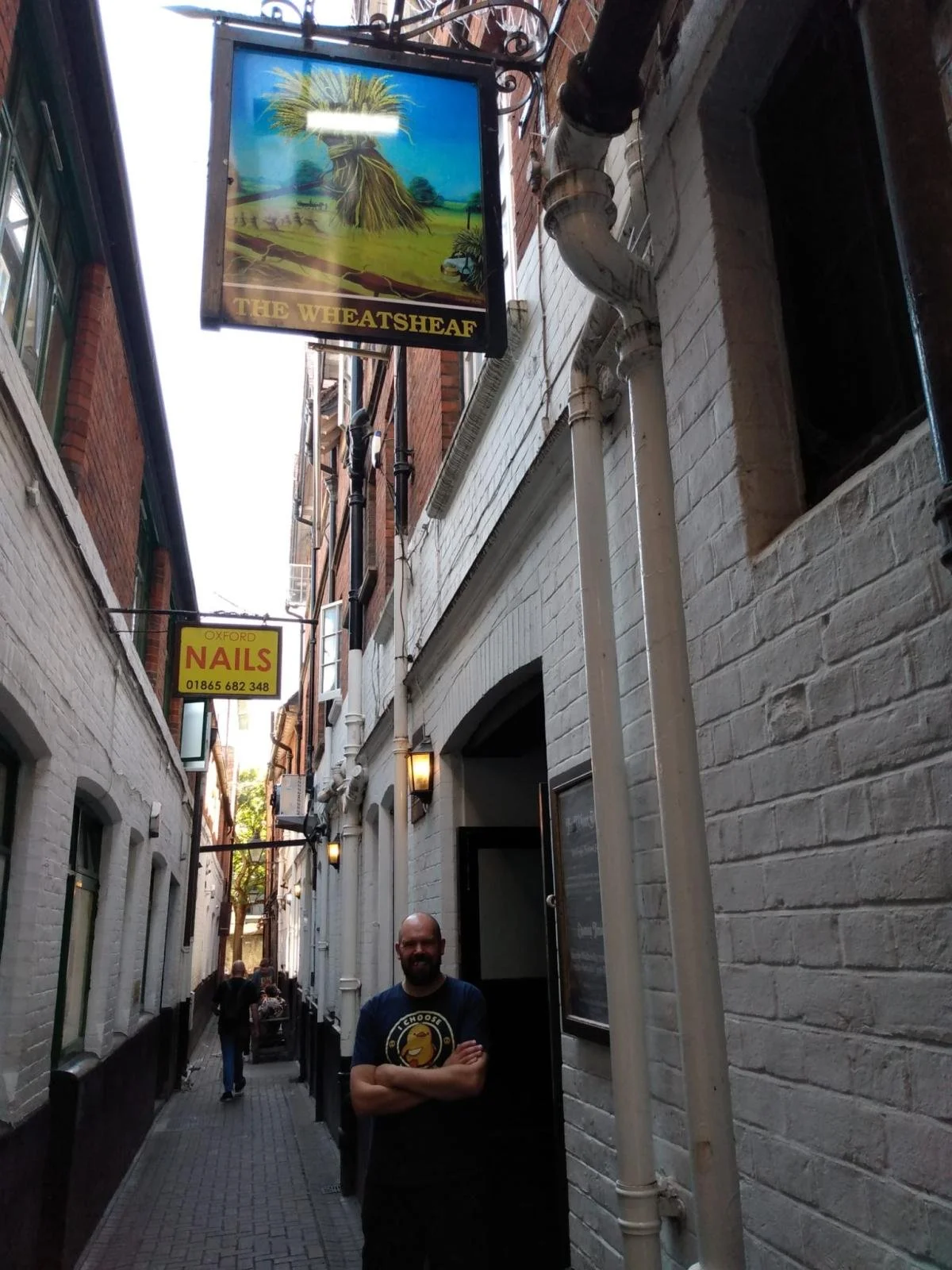
The Wheatsheaf
Hidden away behind the High Street, down a narrow passage leading towards Blue Boar Street, The Wheatsheaf is one of those Oxford pubs you could easily walk past without ever knowing it was there.
There has been an inn on this site since the 1650s. The first building was built in 1654 and was recorded in 1662 under the name The Hen & Chickens. This was Restoration Oxford: the Civil War was over, Charles II had returned to the throne, and the city was beginning to change. Oxford had been a Royalist stronghold during the war, but by the later seventeenth century it was also becoming a centre of science, architecture, and new ideas.
This was the Oxford of Christopher Wren, Robert Hooke, Robert Boyle, and John Locke. Wren was designing the Sheldonian Theatre, Hooke and Boyle were carrying out pioneering experiments, and Locke was studying at Christ Church. Just a short walk from the High Street, the little inn in Wheatsheaf Yard belonged to a city where old loyalties and new learning existed side by side.
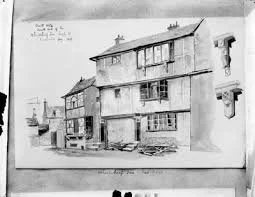
The pub did not become The Wheatsheaf until 1761, when John Walker received permission from the town council to put up a new sign. By the late eighteenth century, it was described as a large and busy public house, with stables, a garden, and a skittle alley — a reminder that Oxford’s inns were not just places to drink, but places to meet, trade, eat, lodge, and play.
In the nineteenth century, The Wheatsheaf continued to be part of the working life of the city. It hosted dinners and meetings, had a club room, and was home for a time to the Albion Lodge of the Ancient Order of Druids. In 1828, Thomas Davis junior even advertised that he was making Oxford Sausage here. By 1846, the inn held a university wine licence.
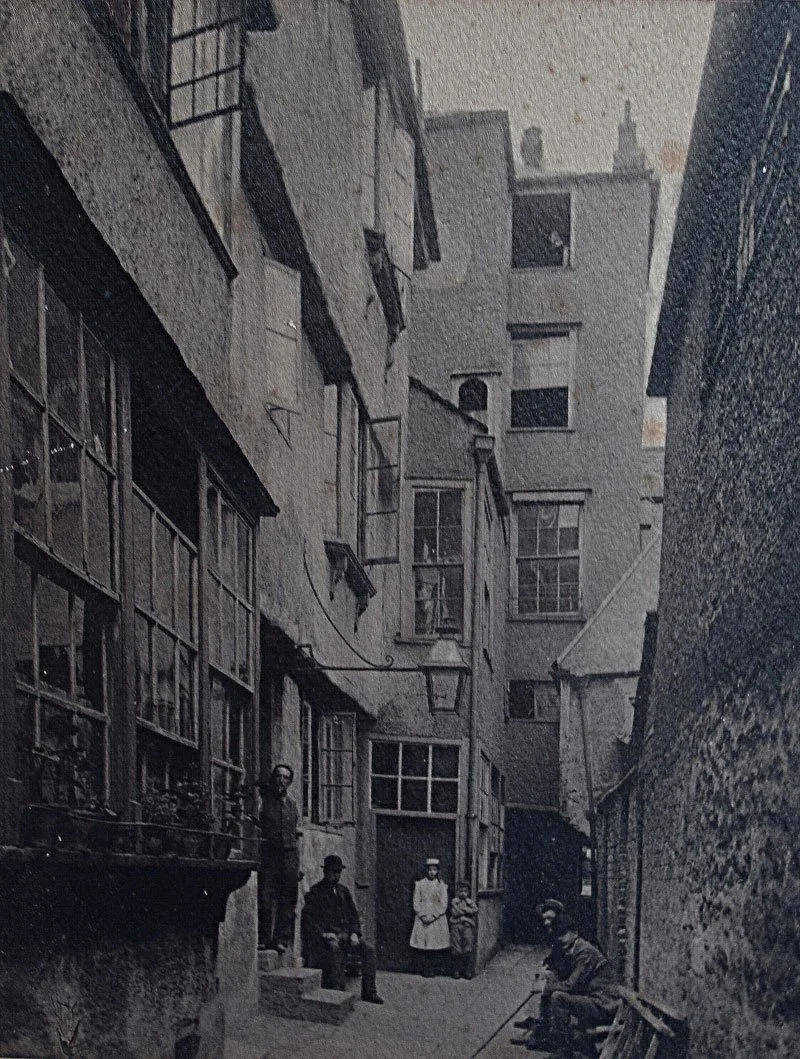
The old Wheatsheaf, together with neighbouring buildings on the High Street, was demolished in August 1896 and rebuilt in 1897. The present pub dates from that rebuild, but it kept something of the older inn’s hidden character. Since 2000, The Wheatsheaf has been a free house.
Today, The Wheatsheaf remains tucked away from the bustle of the High Street: a small pub with a long memory. Like so many places in Oxford, it hides centuries of stories behind an easily missed doorway.