
All Souls College
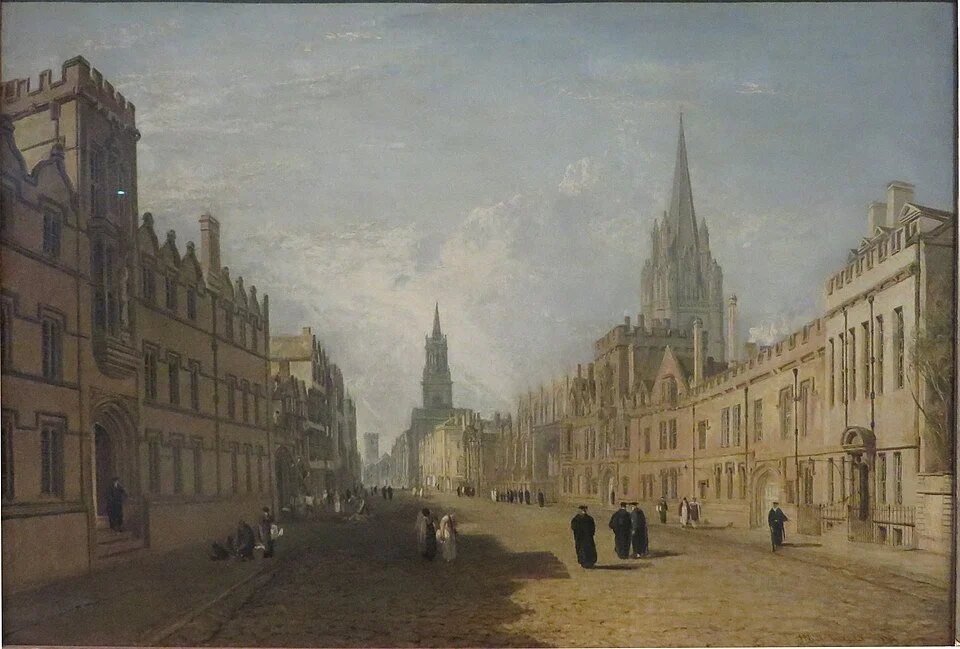
All Sous College stands on the High Street, on the east corner of Radcliffe Square. It was founded in 1438 by Henry Chichele, Archbishop of Canterbury and Henry VI, who provided for 40 Fellows and a Warden, all under Holy Orders, to study arts, theology, and civil and canon law.
The college today maintains that small size, having approximately 80 members, all of whom are Fellows. In one important respect, All Souls remains unlike any other Oxford college. It has no undergraduates. Indeed, it has no ordinary students at all. Instead, it is a college of Fellows — a small, self-governing academic community devoted to research, scholarship, and public life.
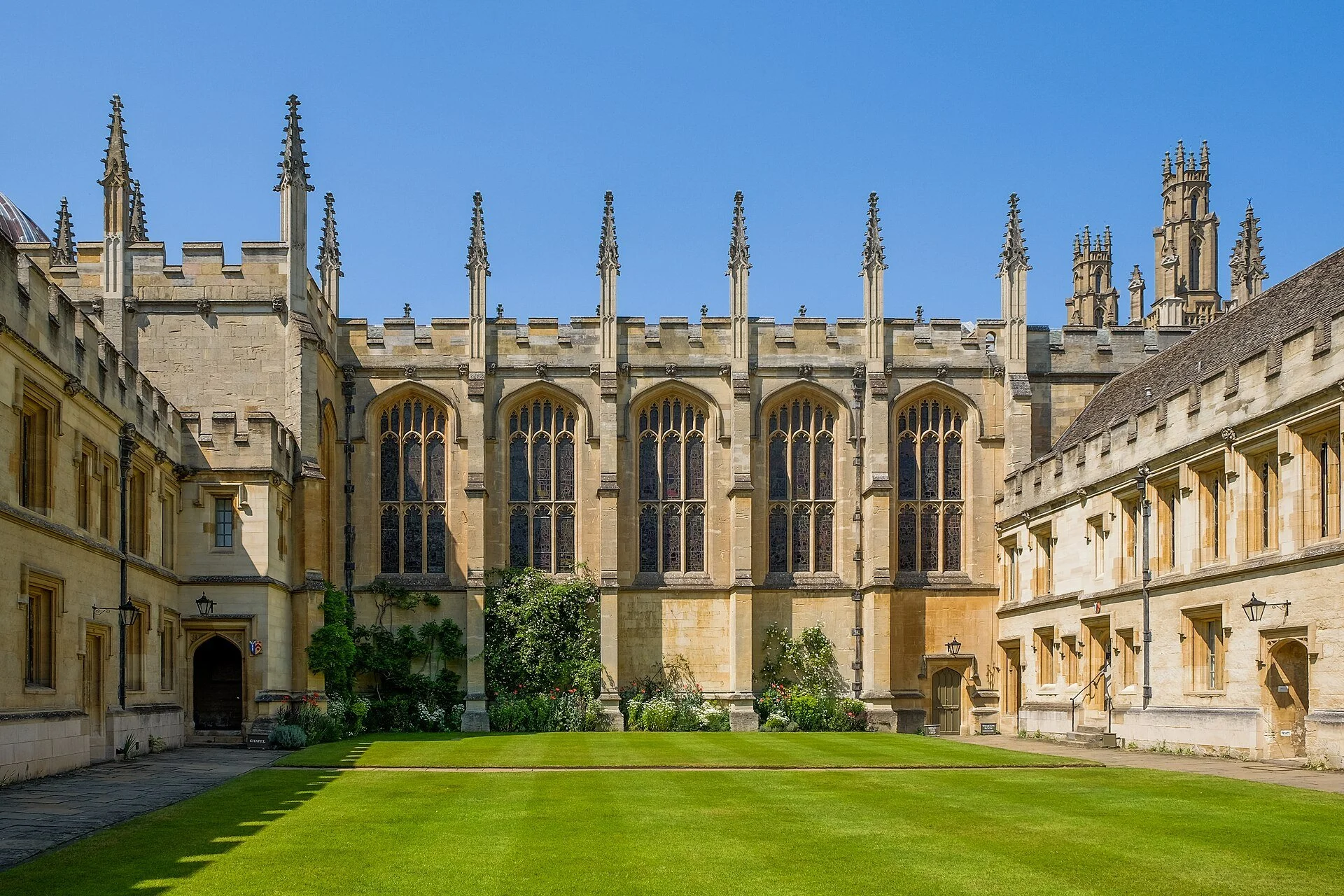
The Front Quad was built in the 1440’s, with a gate house and tower facing south onto the high street side, accommodation for fellows on the east and west sides, and the chapel on the north side. The chapel, on the north side of the quad, is one of the most intimate Gothic chapels in Oxford: small, richly atmospheric, and still an important part of College life.
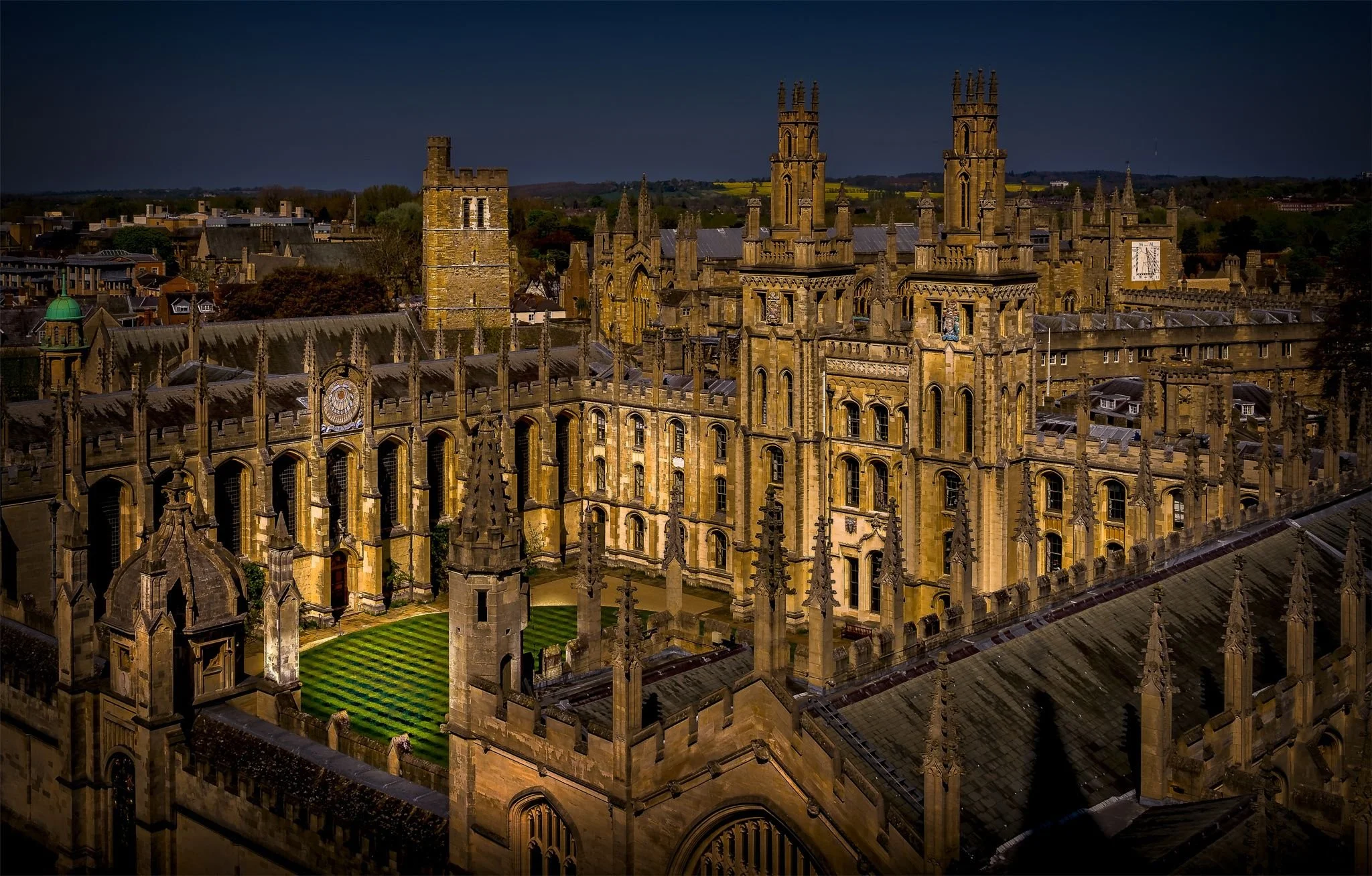
Beyond the chapel lies the Great Quad, created in the early eighteenth century as part of the remaking of this part of Oxford. Nicholas Hawksmoor, a student of the great architect and Fellow of the College Christopher Wren, was commissioned to build it as part of the redesign of the area that included the building of the Radcliffe Camera next door.
The Hawksmoor towers, rising like the west front of a Gothic cathedral, dominate the quad and give All Souls one of the most memorable skylines in the city. They also form part of the wider architectural theatre of Radcliffe Square, alongside the Radcliffe Camera and St Mary’s Church.
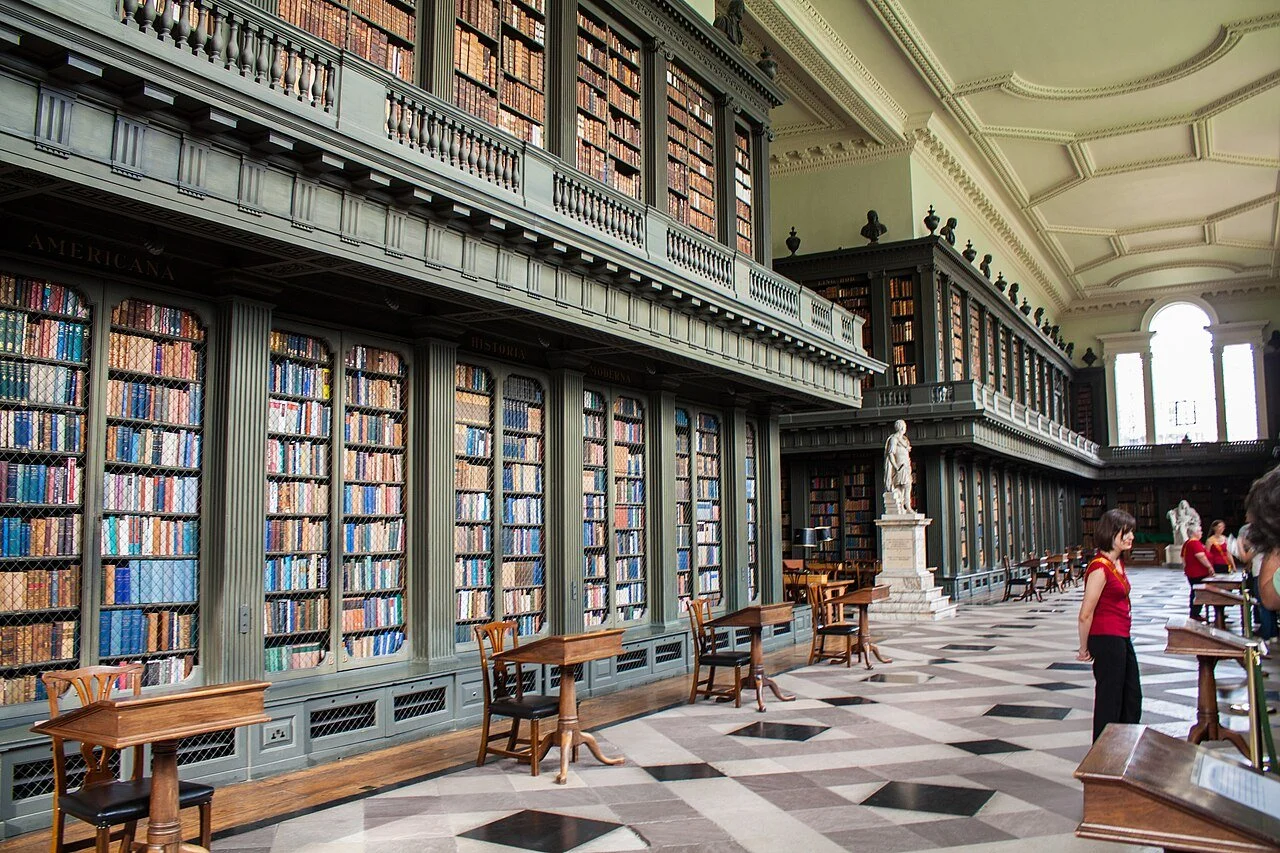
On the north side of the Great Quad stands the college library, long known as the Codrington Library. It was endowed by Christopher Codrington, a former Fellow of the college whose wealth came largely from sugar plantations in the Caribbean. The library is both beautiful and morally complicated: a monument to learning, but also a reminder that the history of the university is tied to the wider history of empire, colonialism, and slavery.
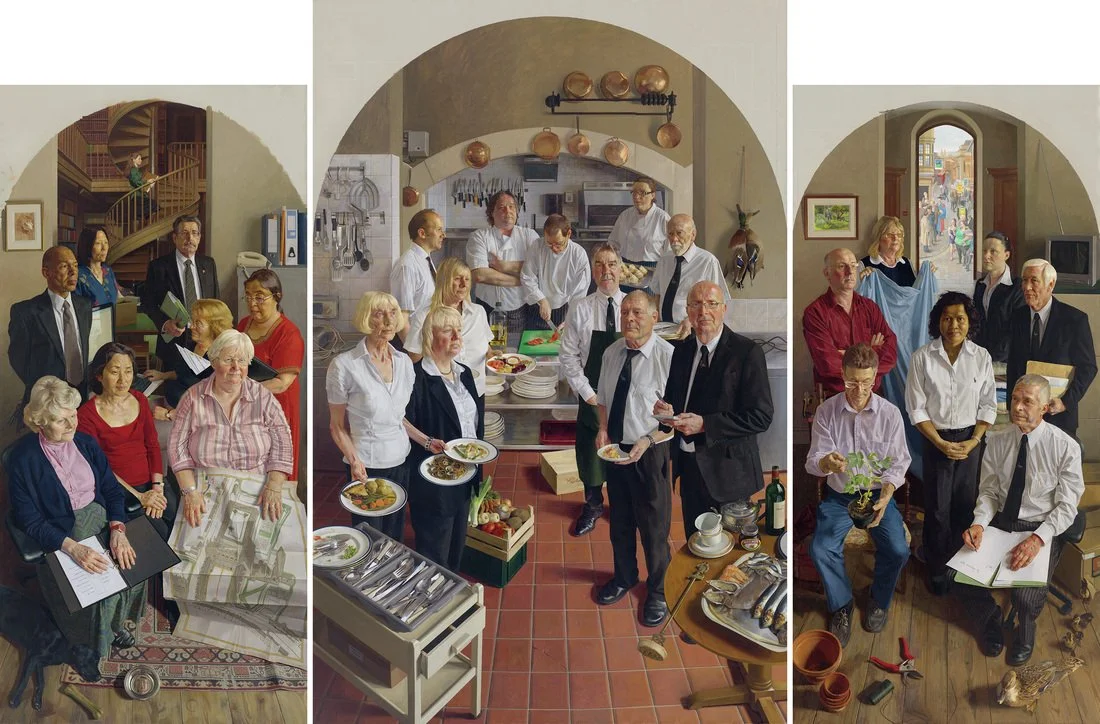
Over the centuries, All Souls has produced and attracted some of the most influential figures in British intellectual and public life. Its Fellows have included Sir Christopher Wren, the architect of St Paul’s Cathedral; Robert Recorde, the Welsh mathematician who introduced the equals sign; T. E. Lawrence, better known as Lawrence of Arabia; Lord Salisbury, three times Prime Minister; and Isaiah Berlin, one of the great political philosophers of the twentieth century. The college has long been associated with major historians, lawyers, economists, diplomats, theologians, and public servants. This is part of what gives All Souls its unusual character: it is not a college of students passing through Oxford, but a small and highly selective community whose influence has often reached far beyond the university.